
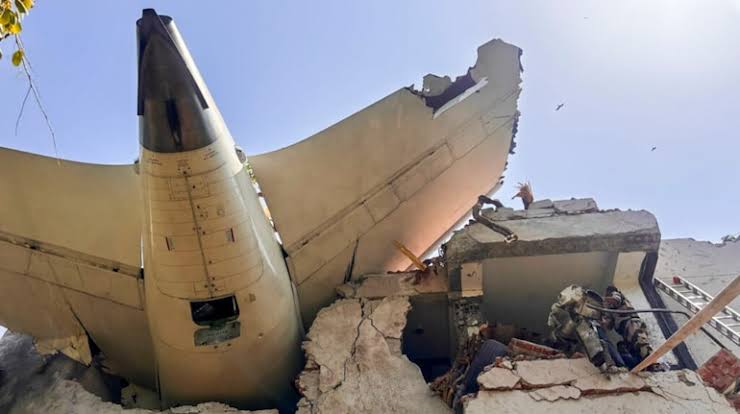
A routine international flight turned into one of India’s worst aviation disasters on June 12 when Air India flight AI 171 crashed shortly after takeoff from Ahmedabad. The Boeing 787-8 Dreamliner, bound for London Gatwick, went down just two kilometres from the runway, slamming into a doctors’ hostel in the Meghani Nagar area and erupting into flames.
The crash killed 241 people on board. Only one passenger, 40-year-old British national Vishwash Kumar Ramesh, survived. Seated near an emergency exit, he managed to escape before the cabin was engulfed by fire. His brother Ajay, seated next to him, died in the crash.
On the ground, the toll was equally tragic. At least 28 people were killed in the hostel, and over 50 others were injured. Most of the residents were young medical students. The hostel building was heavily damaged, and rescue workers struggled through the night to pull out survivors and retrieve bodies.
Witnesses described the aircraft struggling moments after takeoff. CCTV footage showed it dipping dangerously low before crashing and bursting into a fireball. Locals said it felt like an earthquake. There were reports of lights flickering on the aircraft and a sudden loss of power.
Rescue teams worked through mangled debris and intense heat to recover bodies. Many were charred beyond recognition. By the next morning, 269 bodies had been brought to Civil Hospital, where relatives queued to provide DNA samples for identification.
The dead included high-profile individuals, such as former Gujarat Chief Minister Vijay Rupani. A British family of four and a doctor couple from Rajasthan travelling with their three children were also among the victims. Families of British victims criticised the UK government for not providing adequate support.
Prime Minister Narendra Modi visited the crash site and met with the sole survivor in hospital. Gujarat Chief Minister Bhupendra Patel and Union Home Minister Amit Shah coordinated relief efforts. Both the central and state governments have announced compensation for the victims’ families.
Investigators suspect a technical malfunction. Photos from the site suggest the landing gear may not have retracted. Engine failure or flap problems are also being considered. The black box — containing the cockpit voice recorder and flight data — was recovered from the hostel rooftop and is being analysed.
The Aircraft Accident Investigation Bureau is leading the probe with support from the DGCA. Boeing, GE Aerospace, and investigators from the US and UK are also involved. Officials say it may take weeks before the cause is known.
This was the first total loss of a Dreamliner since the aircraft entered service in 2011. Air India has grounded and is inspecting all its Boeing 787 aircraft. The DGCA has issued additional maintenance directives. Air India has announced compensation packages and promised full cooperation with the inquiry.
Boeing’s stock fell sharply after the crash. Aviation experts are calling for stricter maintenance oversight and more rigorous safety protocols, especially for aircraft operating on high-traffic international routes.
The hostel where the aircraft crashed is now sealed off. Survivors are being treated in hospitals and offered psychological counselling. Many lost close friends and colleagues in the incident. Educational institutions across the city observed a day of mourning.
As the black box is analysed and global aviation authorities await answers, the tragedy of AI 171 stands as a stark reminder of aviation’s fragility. For now, India mourns the lives lost in a disaster that unfolded in just seconds — but will leave scars for years.